Your yard should certainly feel like a useful extension of your home, rather than just an outdoor area you rarely use. You’ll find 30 practical ideas here to help you get your garden looking great and actually useful for your daily life. These suggestions will assist you in creating an inviting outdoor space that absolutely fits your unique lifestyle and what you actually want to do out there.
Varied Height Planters Create a Dynamic Garden Layout
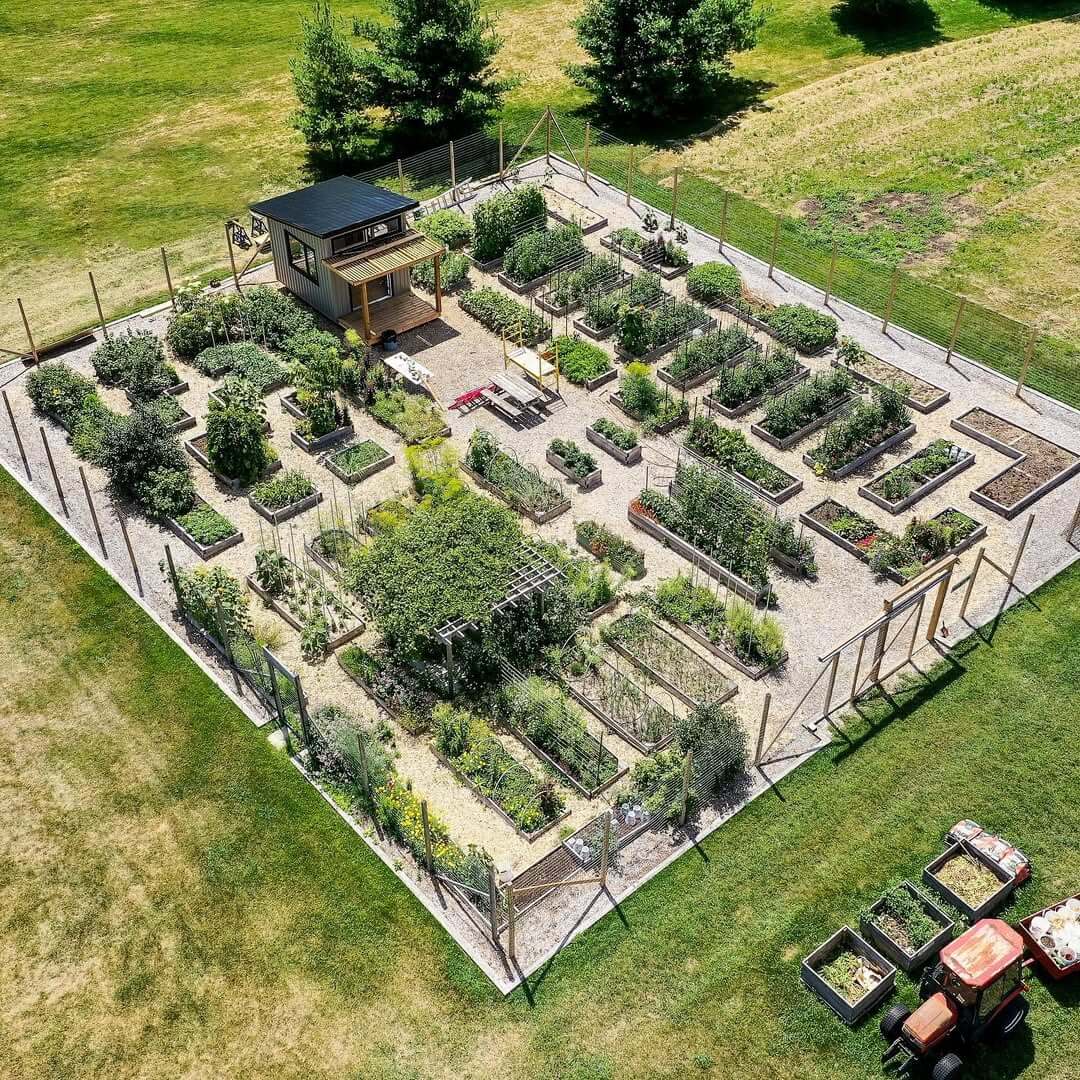
Source: ig: juliadimakos
Raised garden beds in mixed heights and sizes define planting zones and break up flat spaces, allowing for a more dynamic planting scheme.
Connect Garden Zones with a Circular Pathway Hub
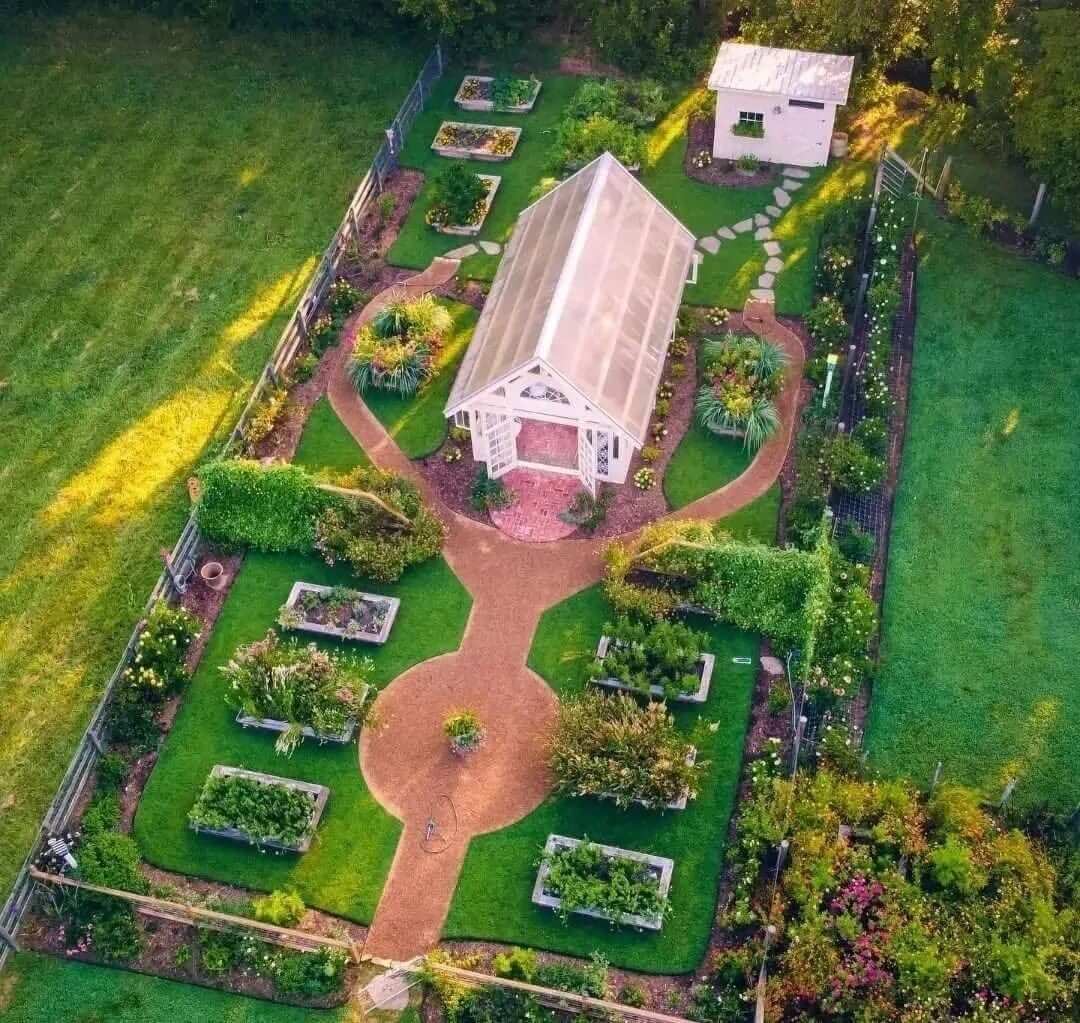
Source: ig: thehappygardeninglife
For connecting different garden beds and structures, a central circular gravel area works well as a hub. Pathways radiate outwards from it, making navigation and plant care easier.
Layered Raised Beds Create Visual Depth
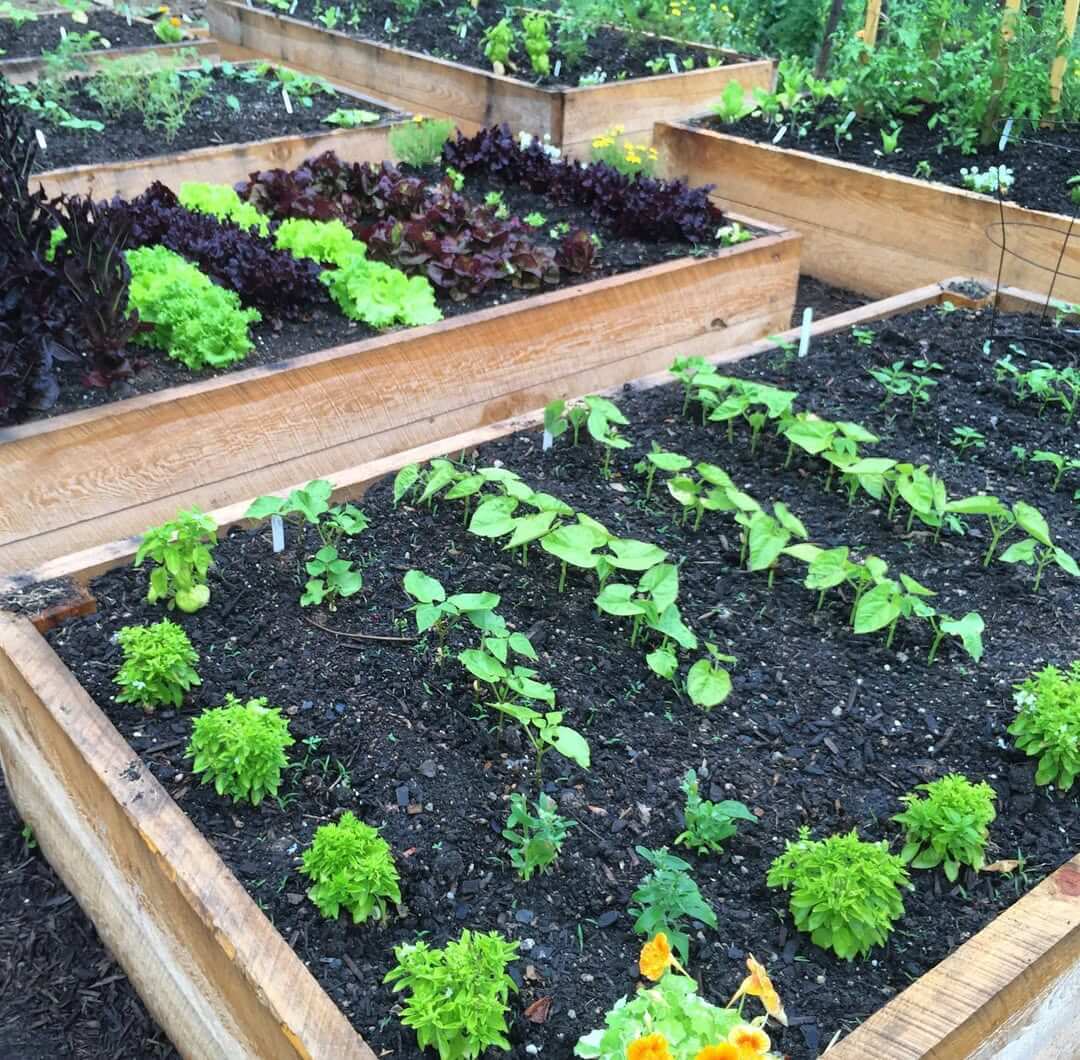
Source: ig: nikijabbour
Arrange your raised garden beds in varying heights. You’ll then have distinct levels for diverse plant selections.
Define Beds with Wide Gravel Pathways
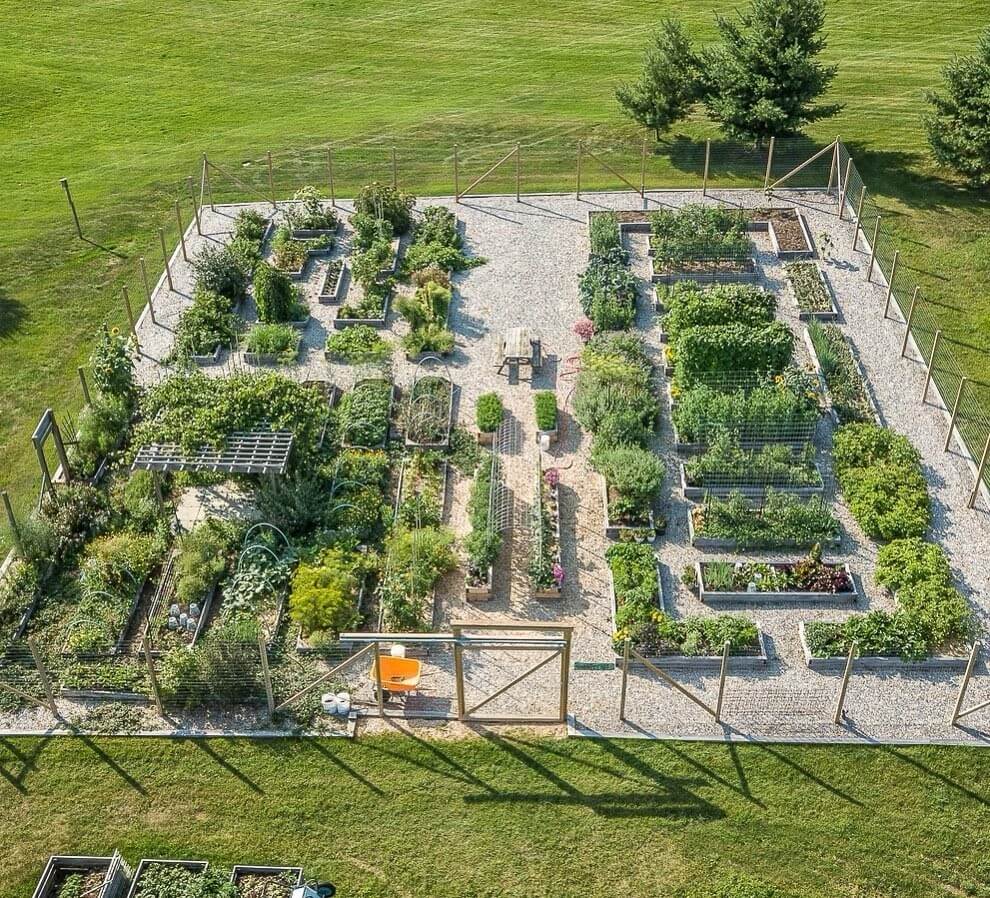
Source: ig: kellogggarden
If you’re organizing a large garden, wide gravel pathways can clearly delineate each planting area. This helps keep things tidy. You’ll also have easy access to every section for tending and harvesting.
Pergola Frames Create Distinct Garden Zones and Pathways
Source: ig: thehappygardeninglife
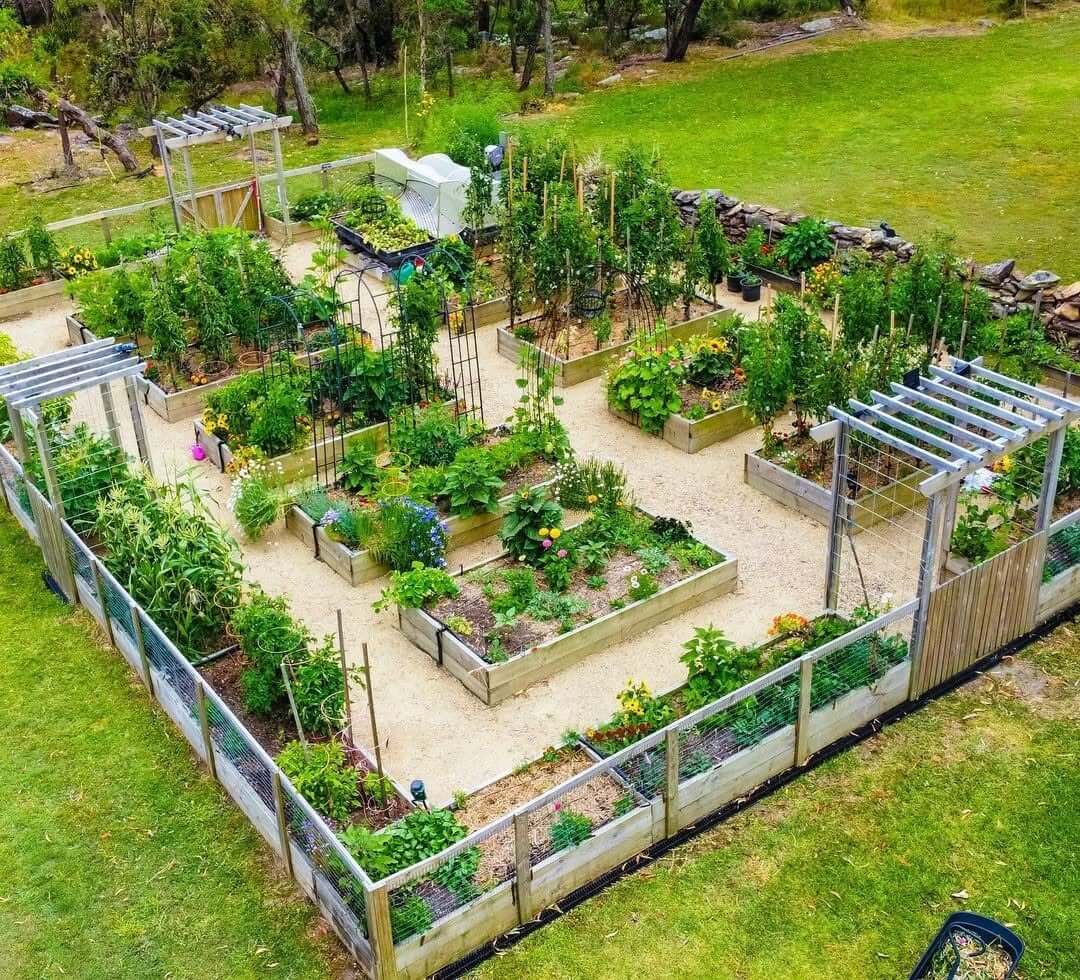
Incorporate wooden pergolas to define different areas within your garden layout. These structures can mark entrances to specific planting beds. They’re also great for creating sheltered seating nooks.
Curved Gravel Path Defines Seating Area
Source: ig: londonhardlandscapes
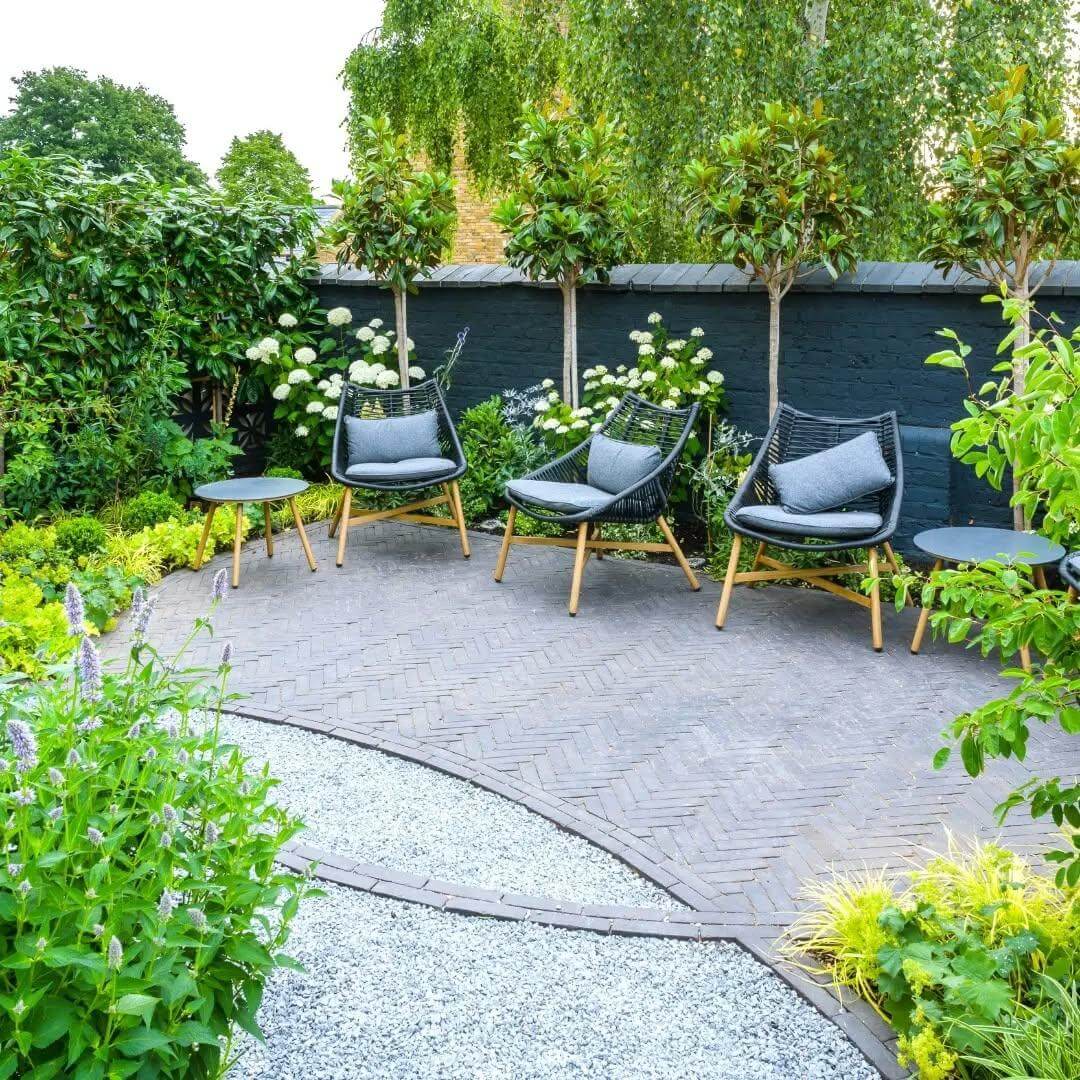
For a defined seating area within the garden, group contemporary woven chairs with light wood frames around small, dark side tables, using pathways to clearly delineate this functional spot.
Structure Planting Areas with Parallel Wooden Raised Beds
Source: ig: overezchickencoop
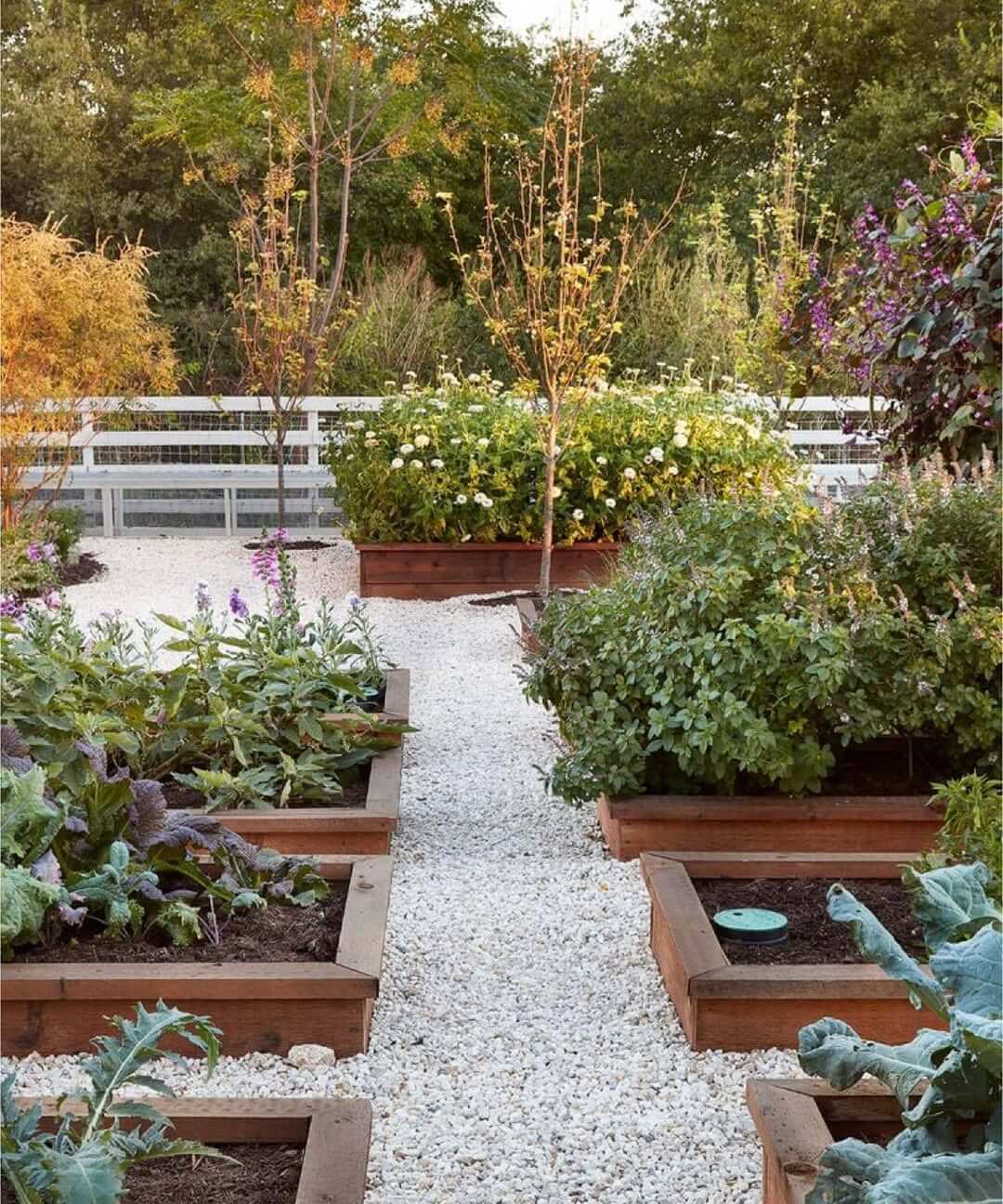
Wooden raised beds, arranged in parallel rows, create distinct planting areas. Their simple rectangular forms and uniform wood tone offer clear visual separation between garden sections. It’s a straightforward way to define pathways.
Design a Modern Entrance with Geometric Paving
Source: ig: londonhardlandscapes
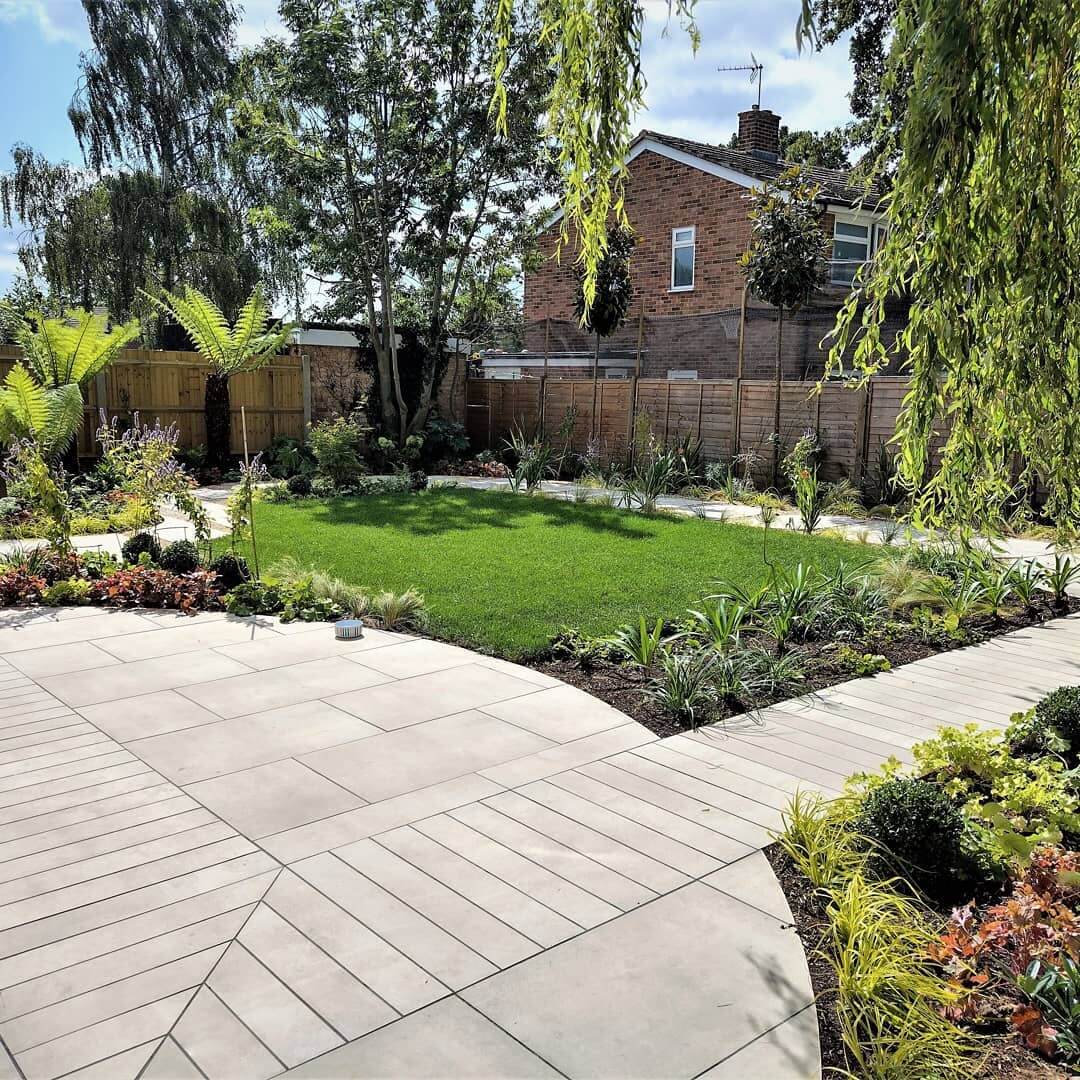
If you’re defining a contemporary patio, large, pale paving slabs laid in a geometric pattern can do the job. Its angled lines and squares break up the expanse, guiding views into the garden.
Arched Trellises Create Vertical Garden Zones

Source: ig: thehappygardeninglife
Arched trellises installed over raised beds add vertical interest. These structures provide support for climbing plants.
Integrate Vertical Growing Space with Wire Trellises
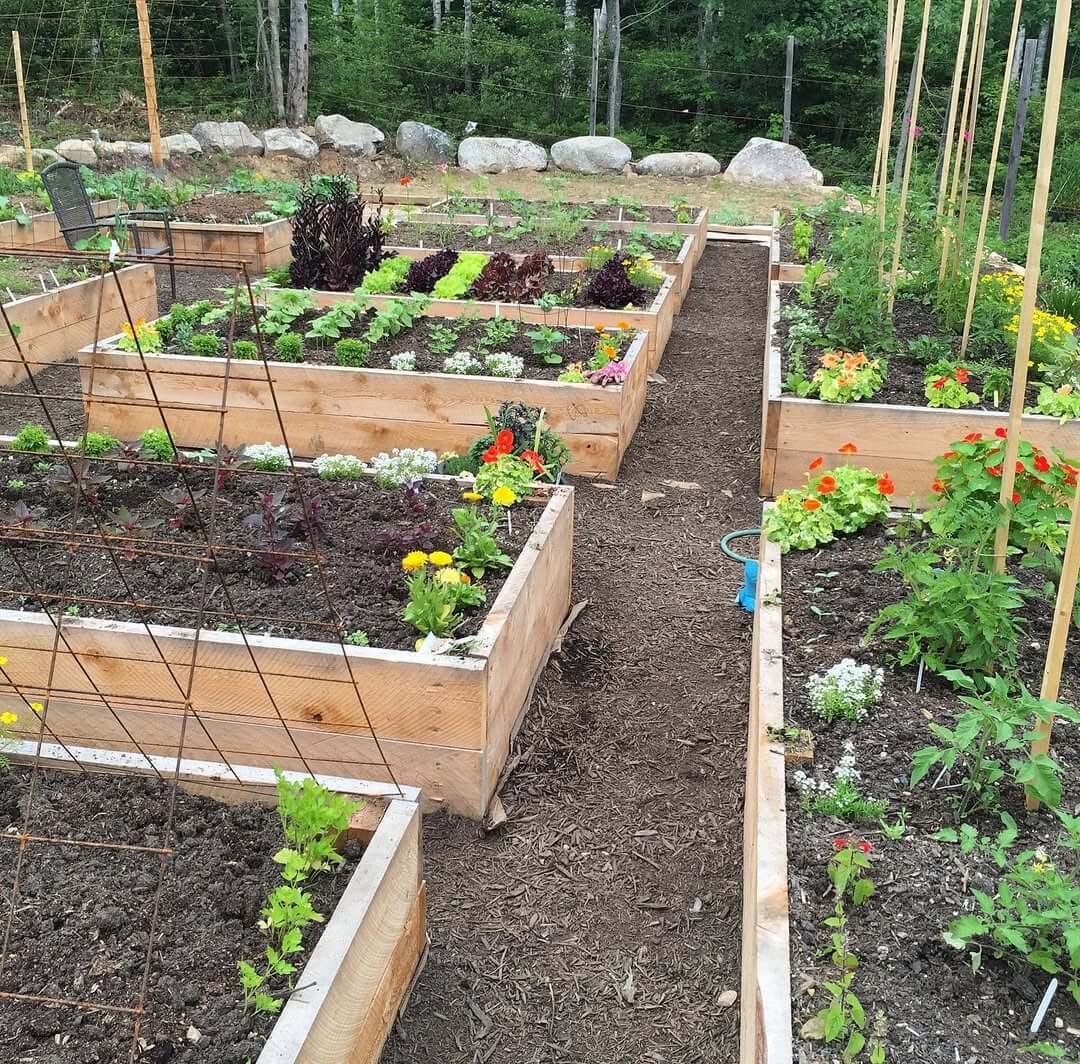
Source: ig: nikijabbour
For defined planting areas, use light wood boxes with wire mesh panels attached to their sides. The panels provide support for climbing plants, creating vertical growing space.
Frame a Garden Path Entrance with a Metal Arch
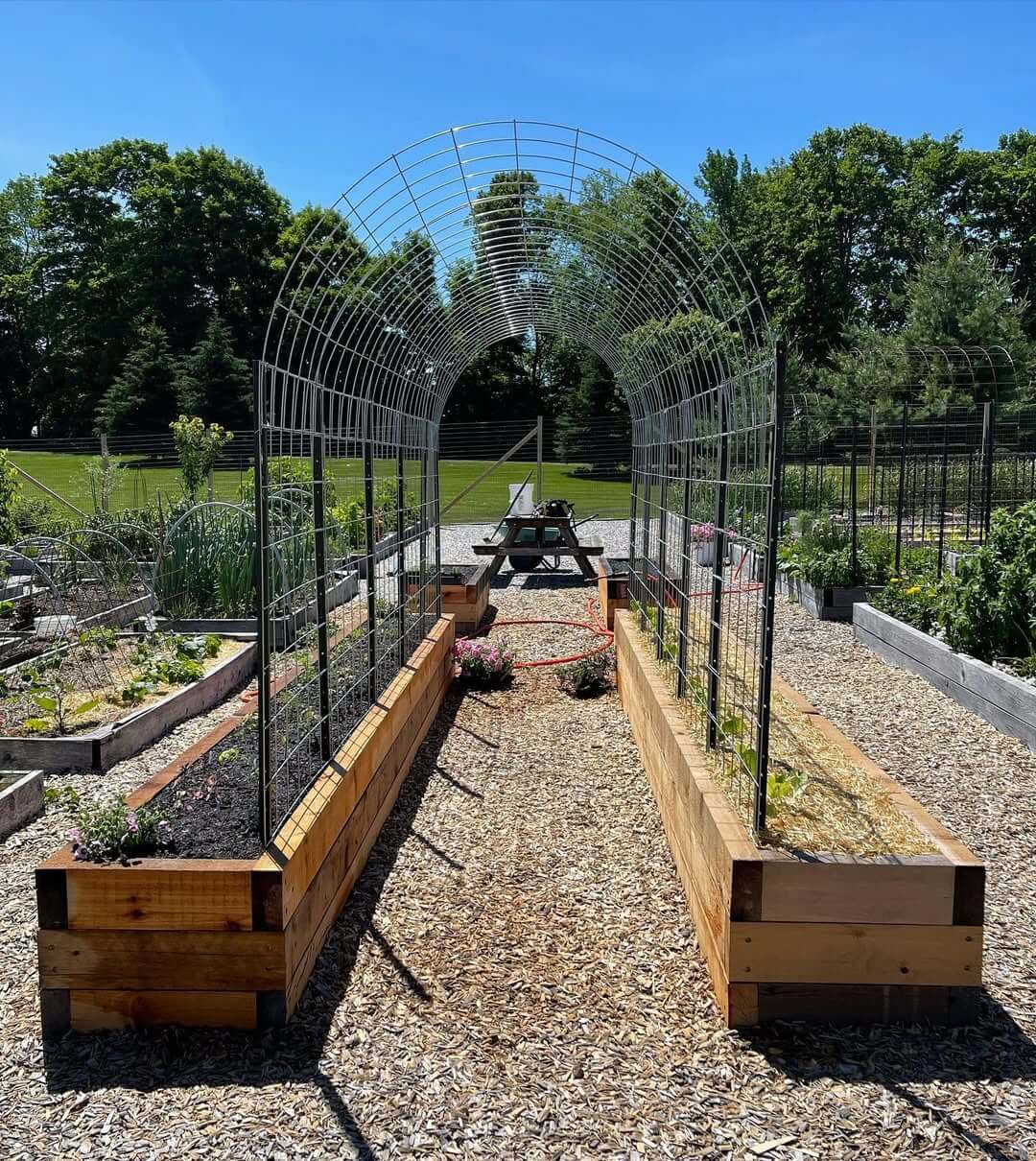
Source: ig: juliadimakos
A garden path’s entrance can be clearly defined with a large metal archway. It’ll create a striking transition and can even support climbing plants.
Metal Garden Arches Create a Series of Outdoor Rooms
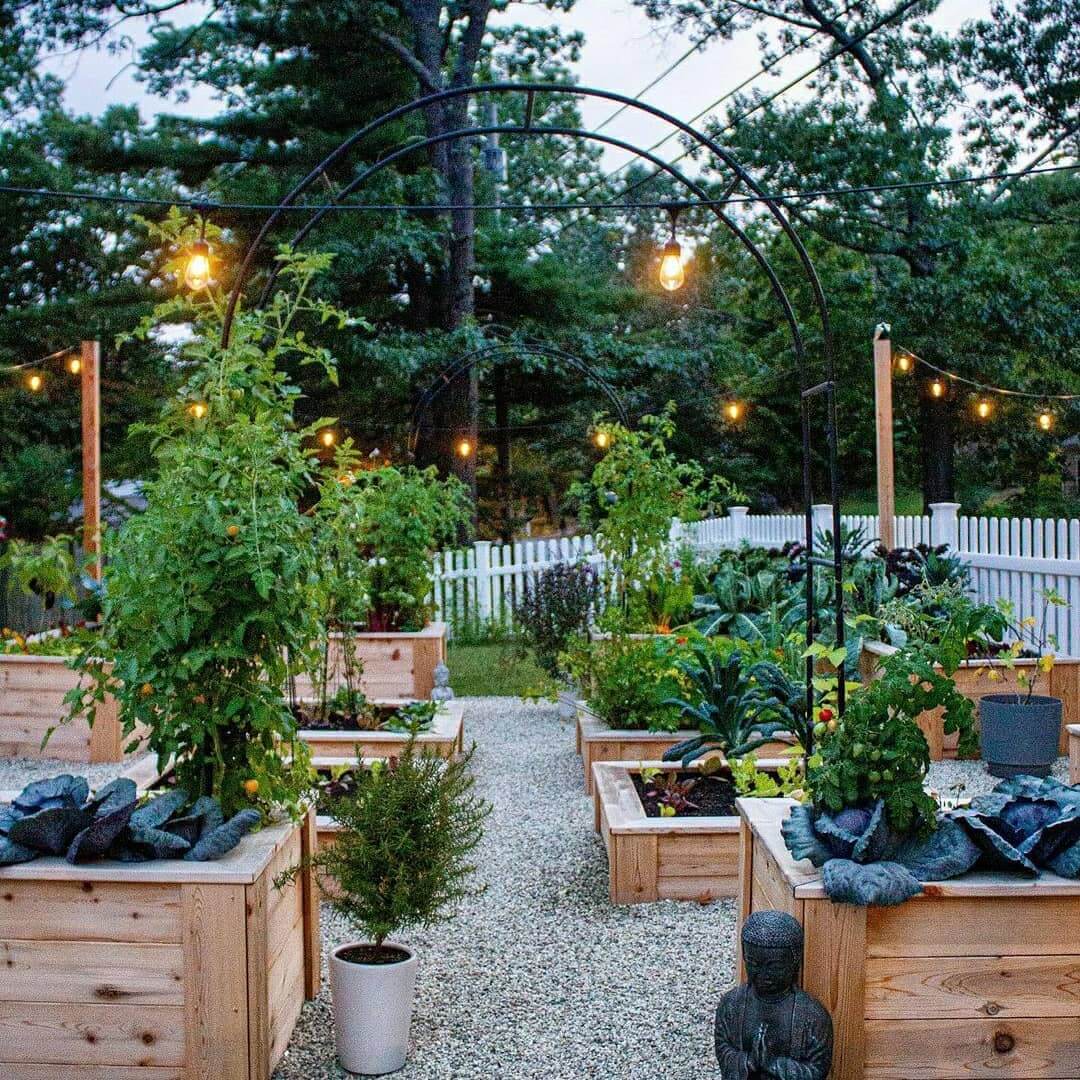
Source: ig: thehappygardeninglife
To create separate zones in your garden, use rounded metal structures. You can drape string lights across them to define the pathways between planted areas.
Soften Lawn Edges with Ornamental Grasses
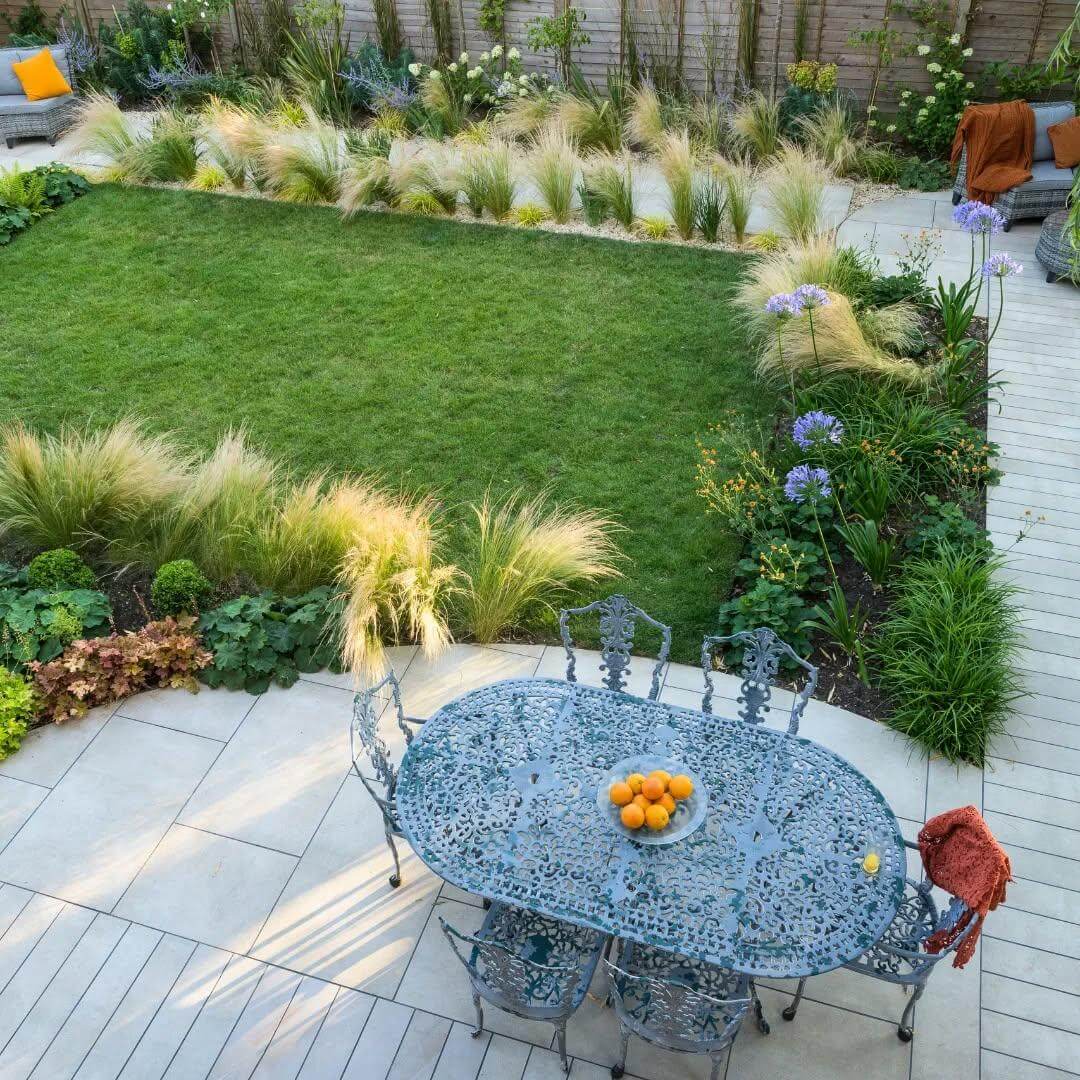
Source: ig: londonhardlandscapes
Plant tall ornamental grasses along the edge of your lawn for a naturalistic border. Their feathery plumes will add movement and texture.
Form a Tunnel Effect with Wire Arches Over Beds

Source: ig: juliadimakos
A series of large, arched wire structures installed over your garden beds can create a tunnel effect, supporting climbing plants or holding netting for protection.
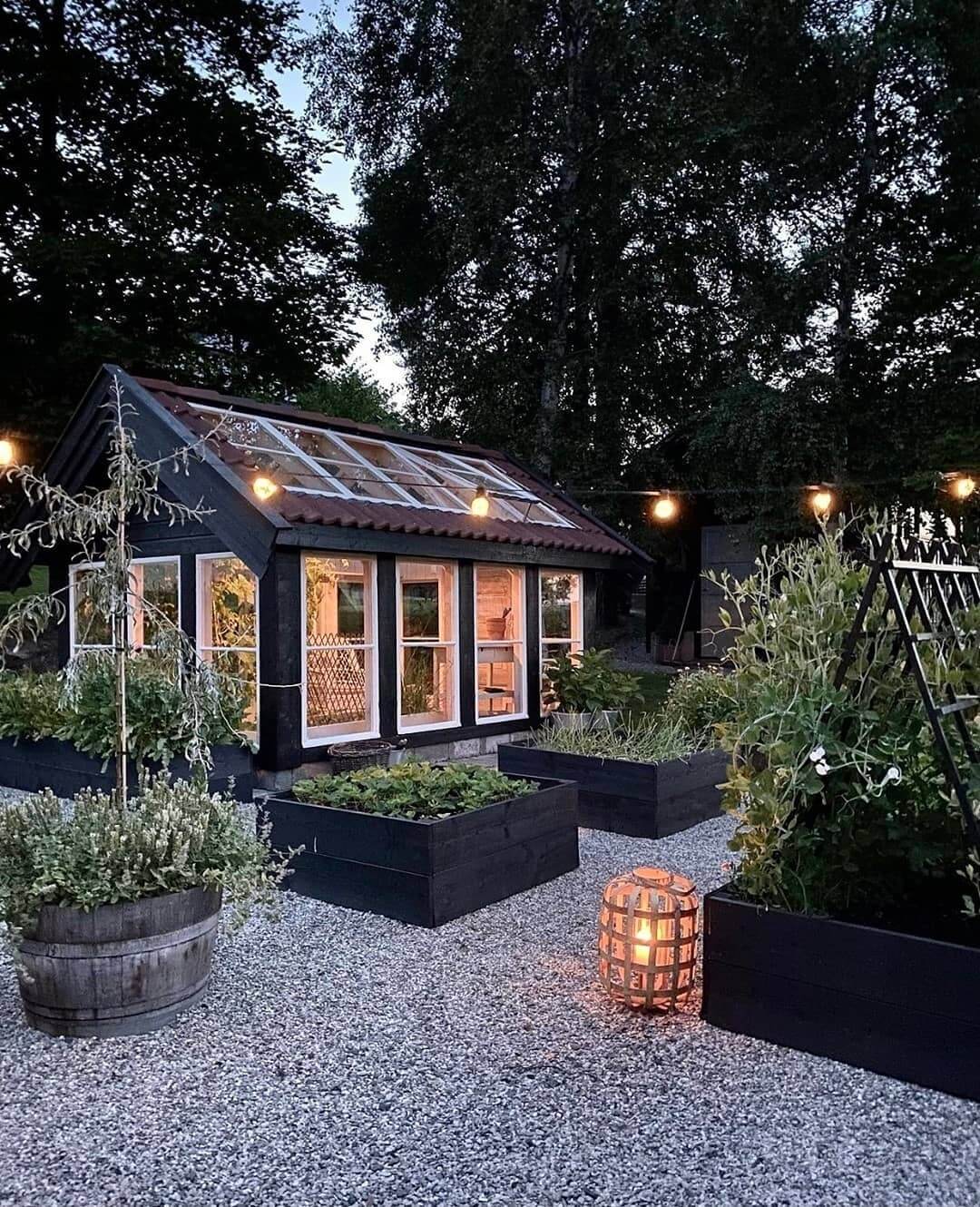
Define a Greenhouse Garden with Black Raised Beds
Source: ig: thehappygardeninglife
Around a greenhouse, deep, rectangular black planters define distinct planting areas. It’s their dark, clean lines that stand against the gravel ground cover.
Welcome Guests with Wooden Pergola Entrances

Source: ig: garden_tales__
Simple wooden pergolas frame the entrances to garden sections, marking the transition into distinct outdoor rooms within the larger space.
Light Wood Raised Beds Create Neat Growing Zones

Source: ig: thehappygardeninglife
It’s practical to arrange light wood planters into distinct growing areas, with gravel paths between them for tending, as their natural finish complements the greenery within.
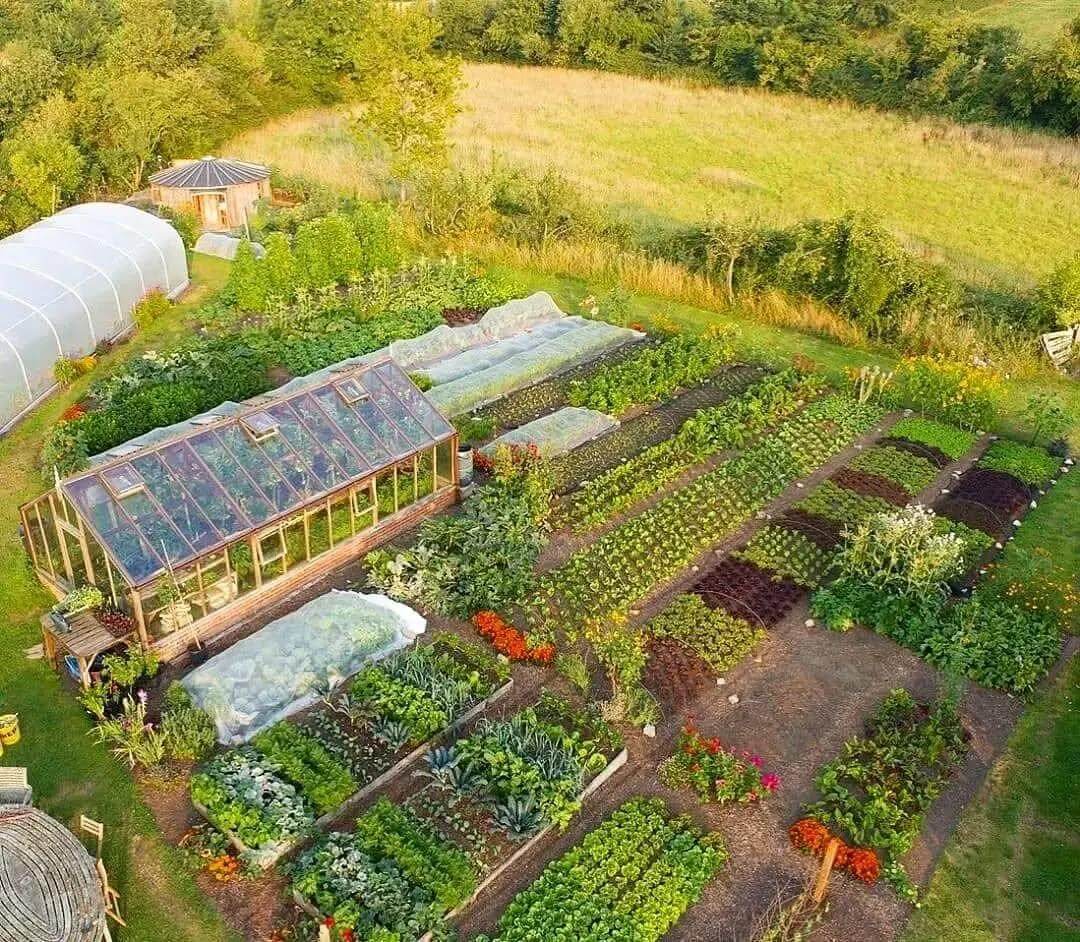
Streamline Vegetable Rows with Low-Profile Raised Beds
Source: ig: thehappygardeninglife
You can arrange low-profile wooden beds into neat, accessible growing zones for your vegetables. Their shallow depth simplifies planting and harvesting for a variety of crops. It’s a straightforward way to keep the garden well-defined.
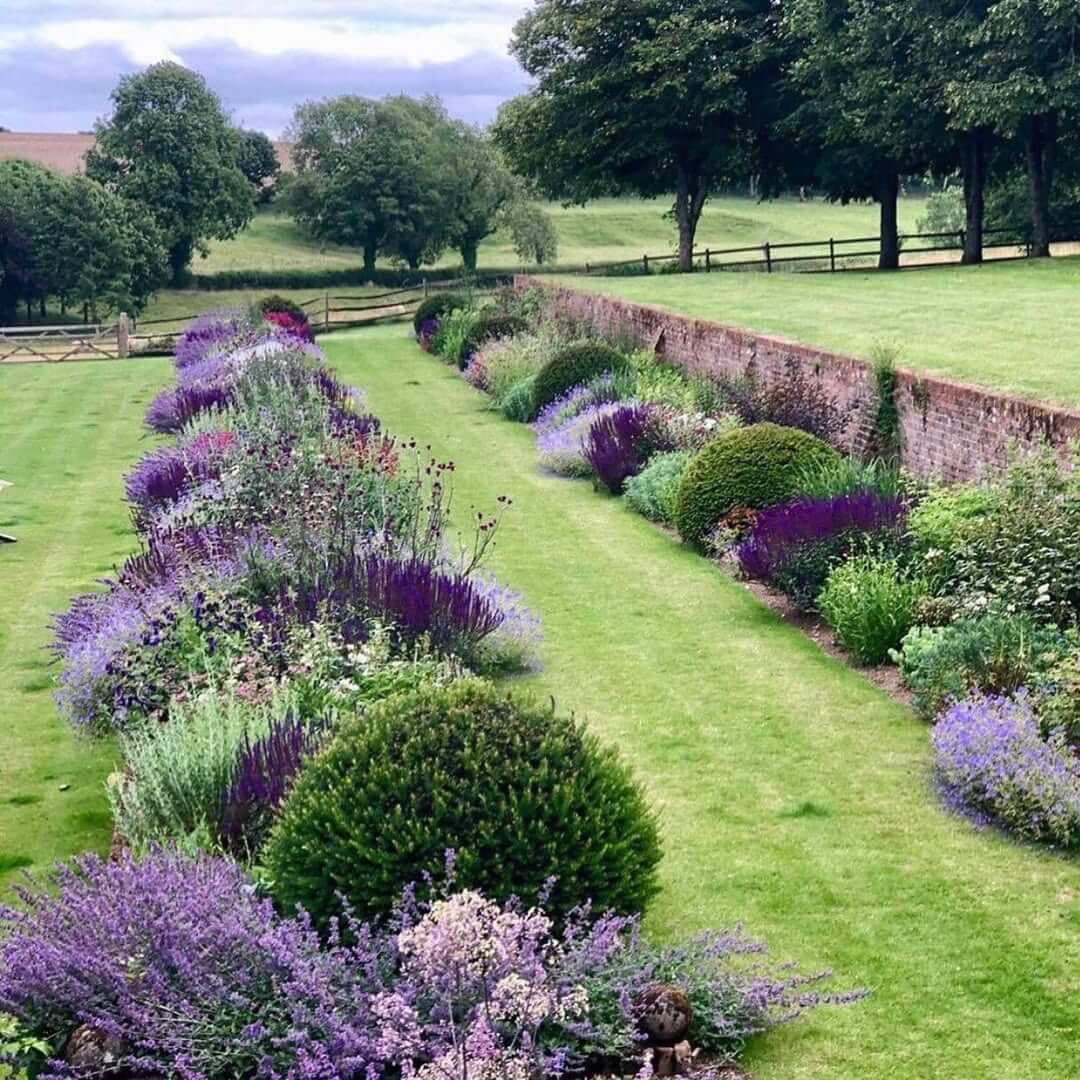
Layered Planting Creates Depth Along Garden Paths
Source: ig: jens_houseandgarden
For a richer planting along your garden paths, use drifts of varying heights and textures. Place lower, mounding shrubs at the front. Put taller, wispy flowers behind them.
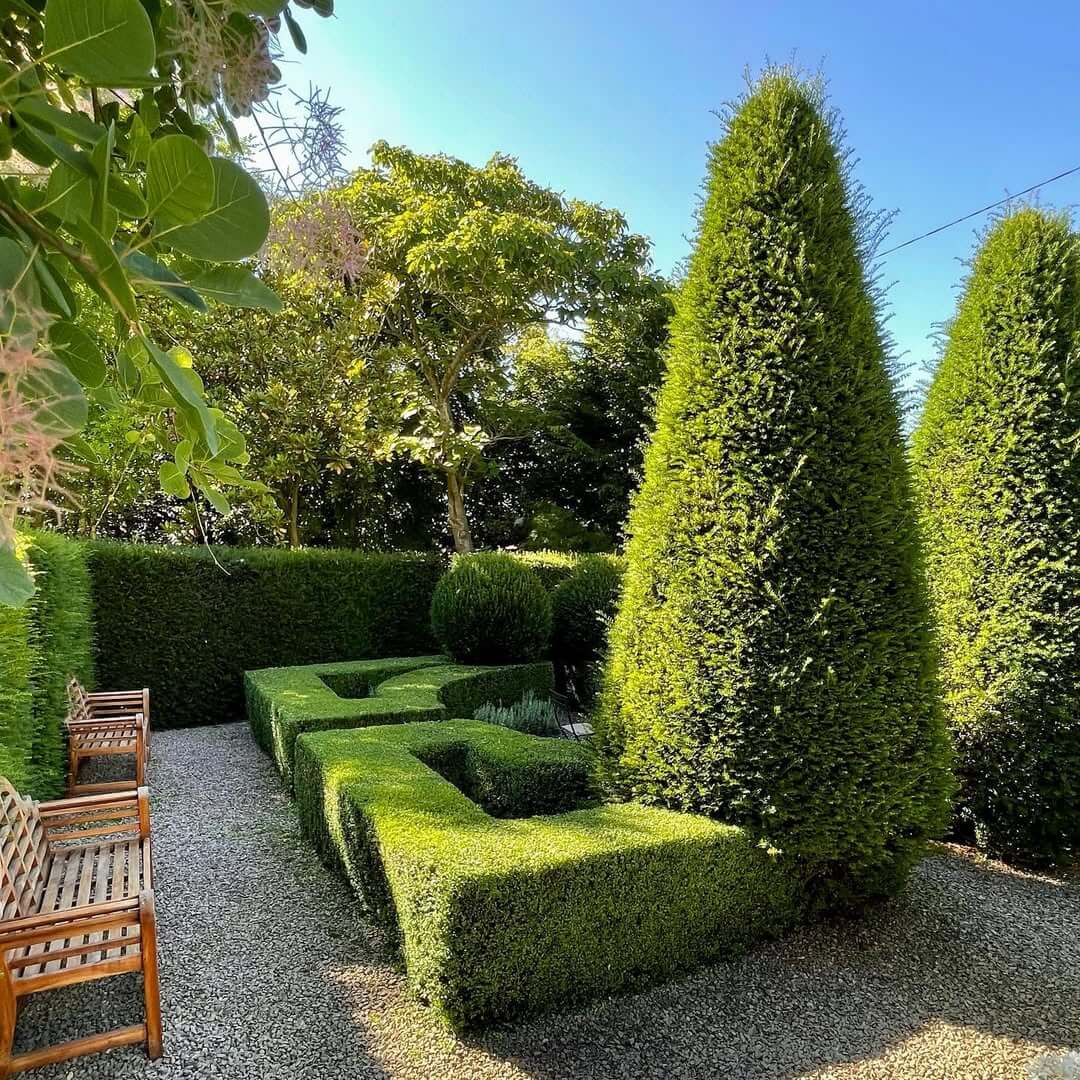
Define Pathways with Sculpted Boxwood Hedges
Source: ig: mcbeacham_ldscpgardener
Sculpted boxwood hedges form sharp, geometric shapes that define garden pathways. The formal approach gives your layout a clean, defined look.
Designate Vegetable Plots with Simple Raised Beds

Source: ig: gillsgreenfarm
Use simple wooden planters to create distinct areas for your vegetables. It’s their low profile that ensures focus remains on the plants inside each plot.
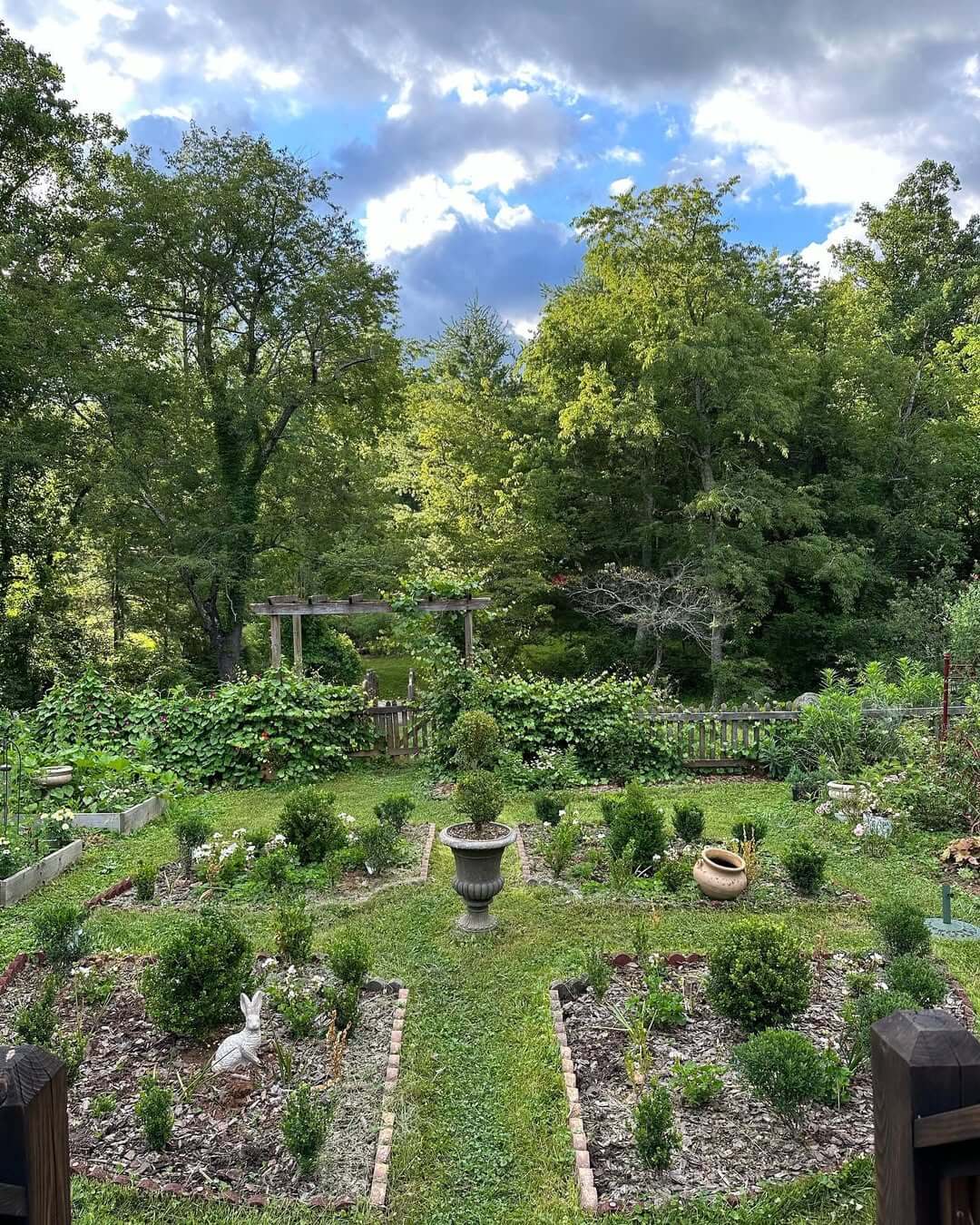
Anchor a Bed with a Topiary Urn
Source: ig: ohyouneed
A tall, cone-shaped topiary in a classic urn makes a strong central anchor for your garden bed. This formal element adds height. It helps draw the eye through the layered plantings.
Frame a Seating Area with an Ornate Metal Arch

Source: ig: lisamaria.roeschel
For a quiet spot in the garden, a decorative metal archway can frame a weathered bench and invite pause. It’s a nice vertical element that helps define the seating area.
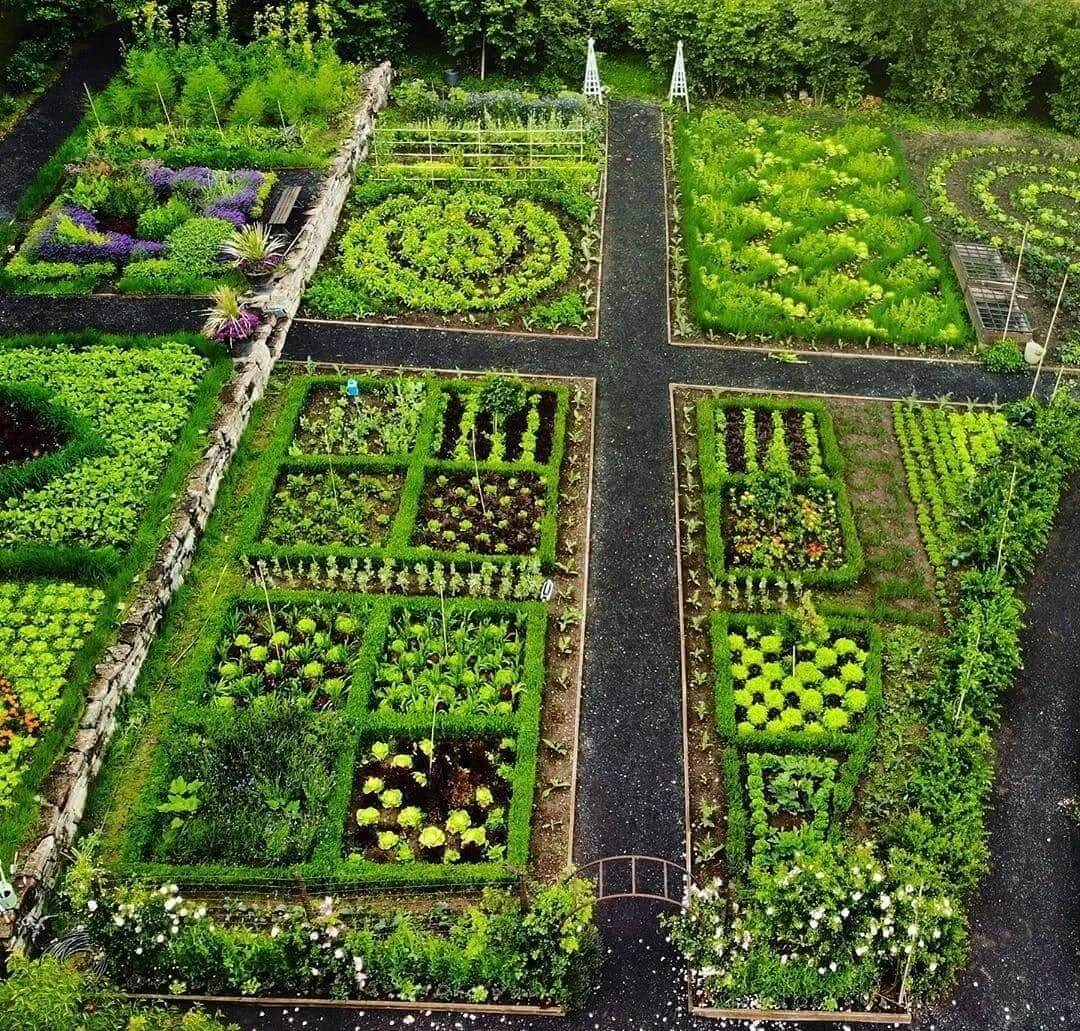
Edge Formal Beds with Low Boxwood Hedges
Source: ig: thehappygardeninglife
To give your garden beds a clean, structured look, neatly trim boxwood hedges to create planting sections within gravel pathways, organizing vegetables and flowers into geometric patterns.
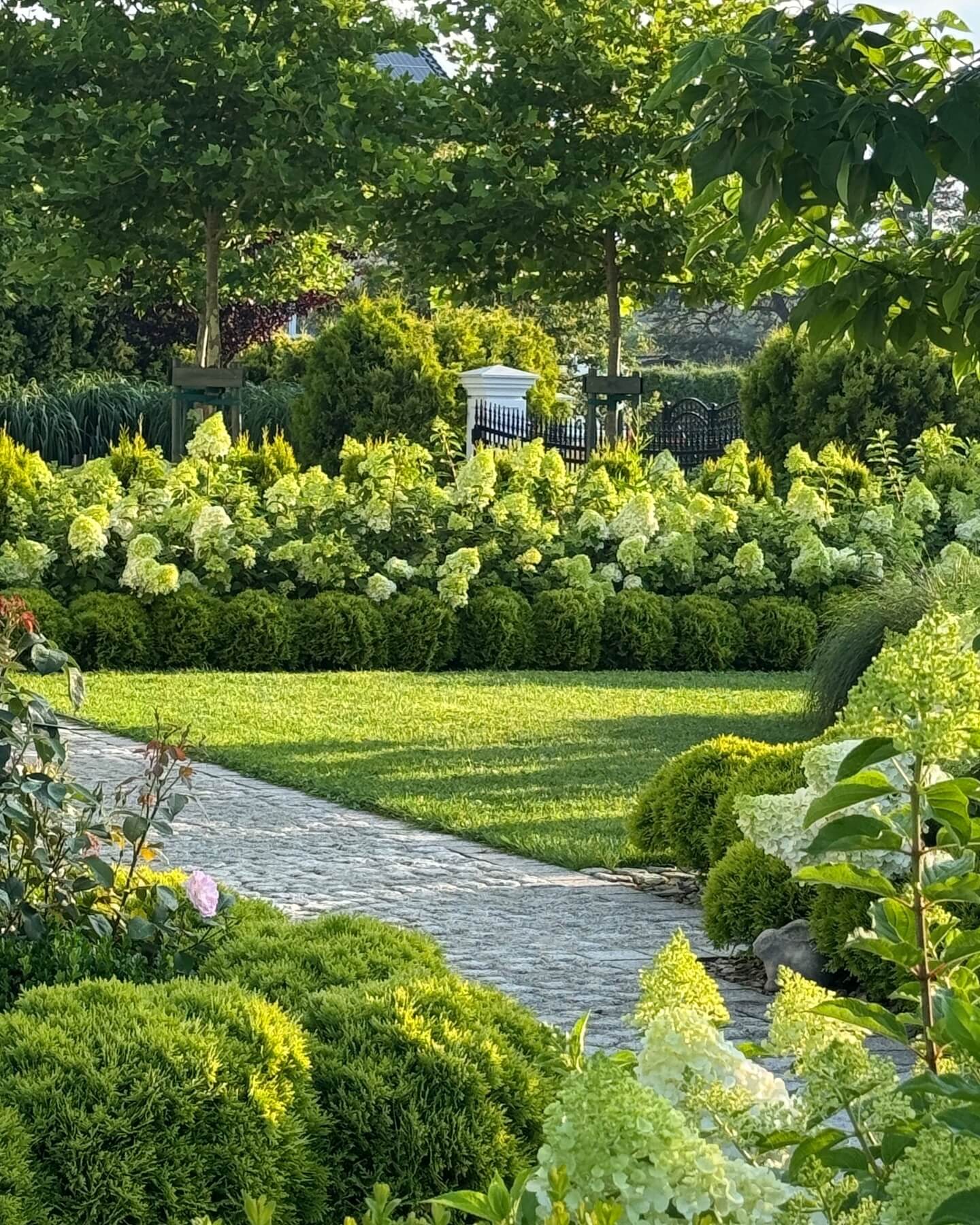
Layer Greenery to Soften Garden Paths
Source: ig: annatokarskaofficial
If your stone walkway feels too stark, lining it with a low, dense border of rounded evergreens is a simple fix. It’ll create a soft edge that contrasts against taller plantings in the background.
Separate Square Beds with Gravel Paths

Source: ig: inglisacres
Timber garden containers arrange tidy cultivation spots. Light-colored crushed stone paths run between these beds. Within the garden scheme, a pair of green metal chairs forms a compact place to sit.
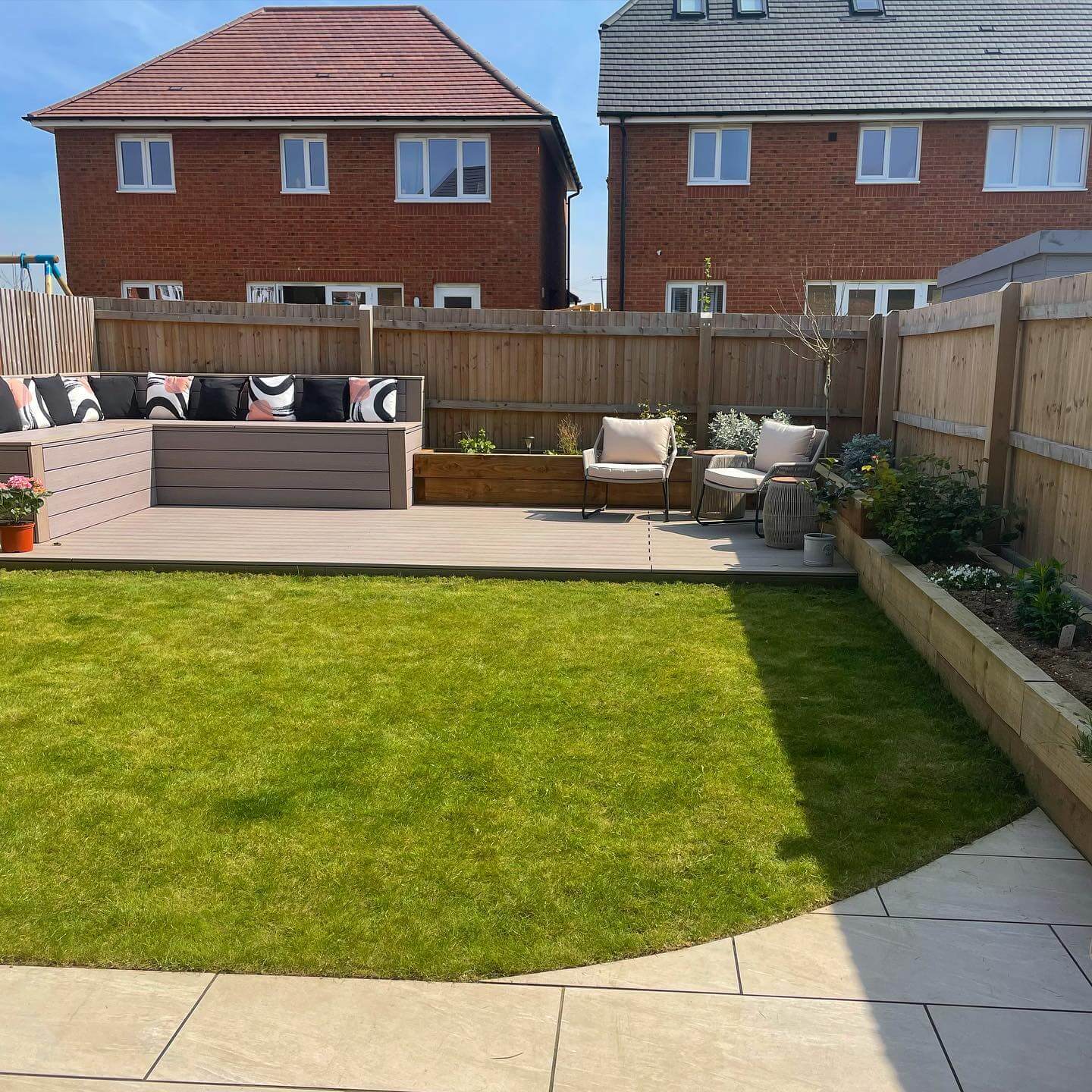
Built-in Deck Seating Creates a Cozy Garden Lounge
Source: ig: _ourfirstkenthome
For ample deck seating that doesn’t eat up yard space, install a L-shaped built-in bench that wraps around the area. It’s made of composite for low maintenance, and patterned cushions can bring in personality.
Dark Raised Beds Define Greenhouse Garden Layouts
Source: ig: thehappygardeninglife
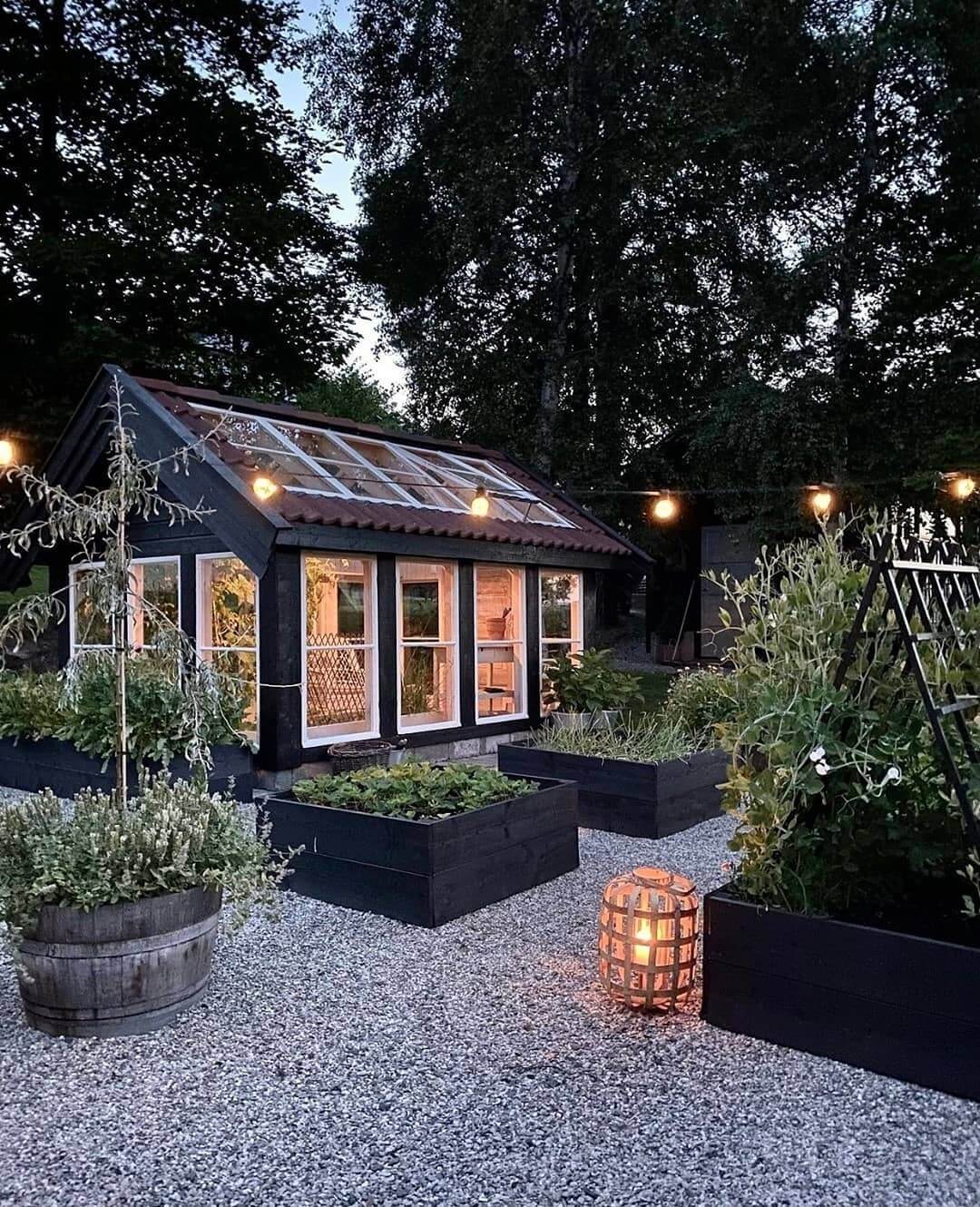
Deep black wooden containers delineate growing zones near the greenhouse. Within these boxes, rows of greenery and flowers find order. A separate wood barrel container introduces a rustic element.
Define a Modern Zone with an Artificial Turf Patch
Source: ig: bowland_stone
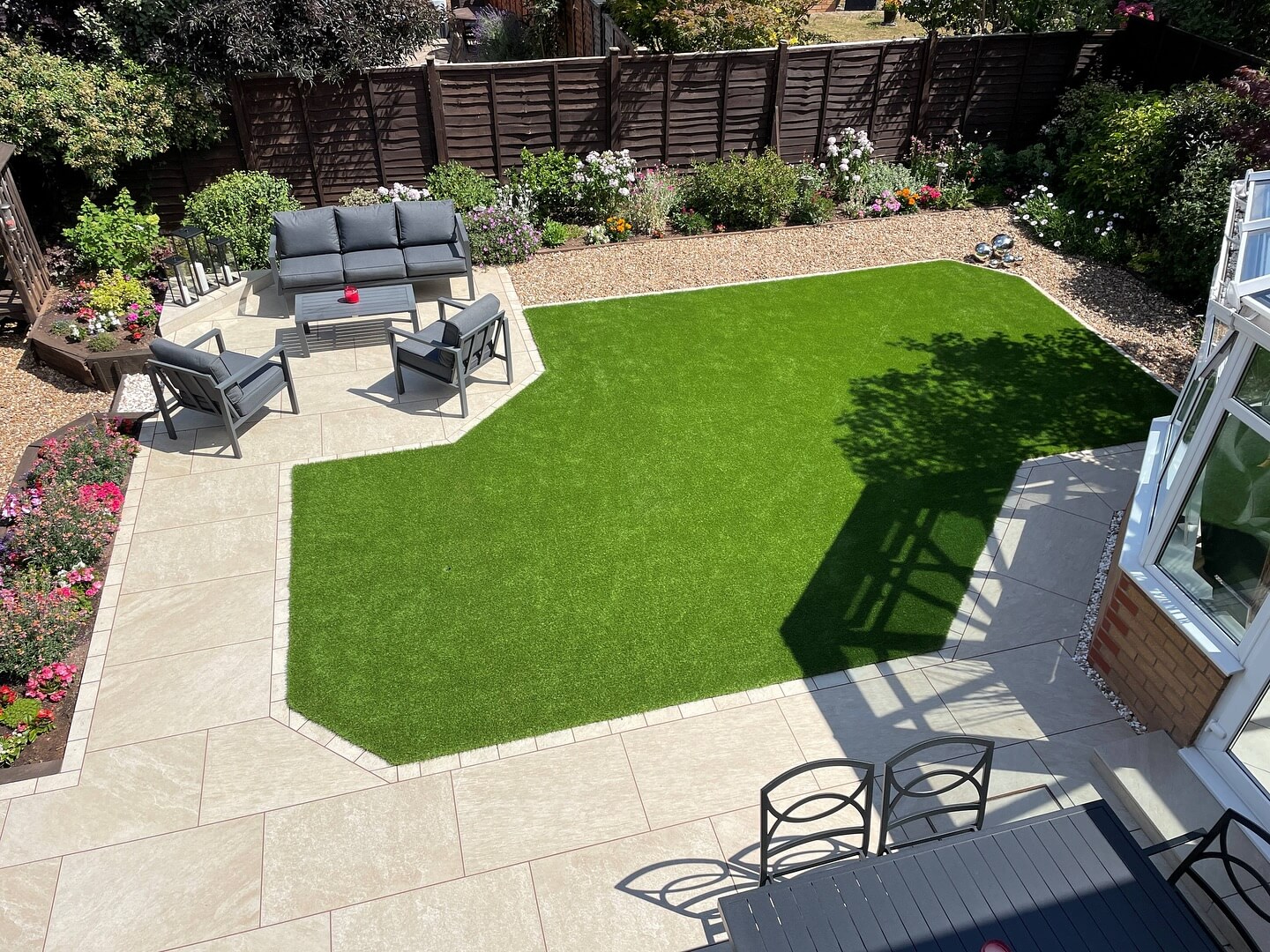
For a low-maintenance green area, incorporate a section of artificial turf. This patch is bordered by paving stones and gravel beds, which helps to separate outdoor living spaces.